
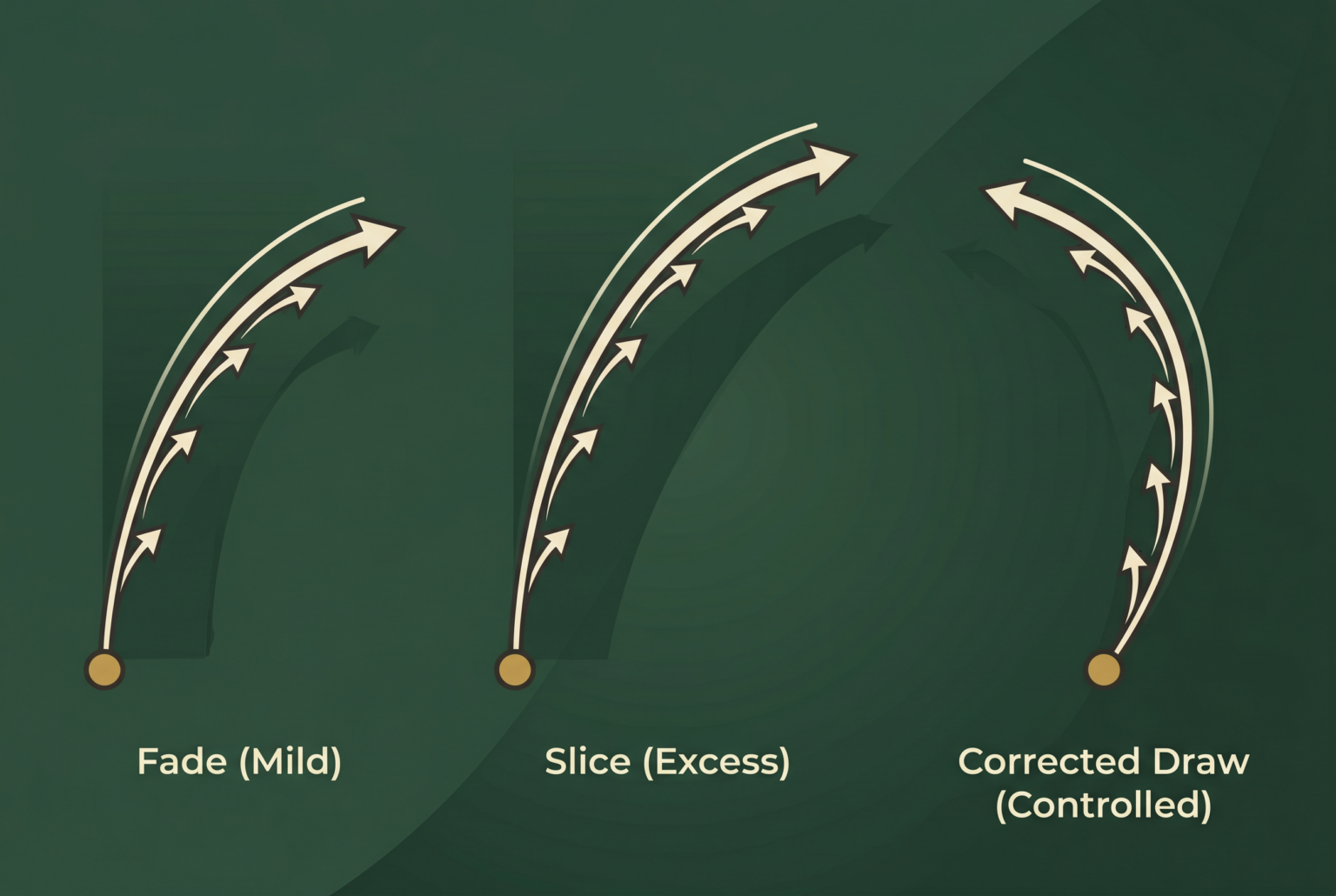
Correct the cause; the curve follows.
Learn how to reduce sidespin with measured changes—not panic swing hacks.
What the slice really is (and what it isn’t)
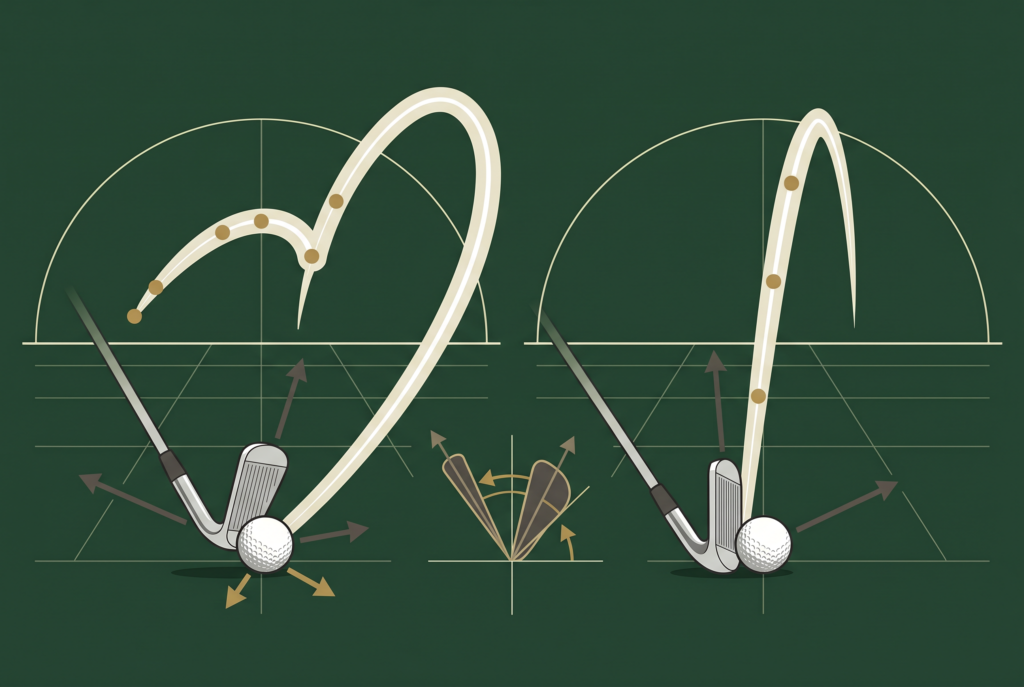
A slice is not a badge of failure or a mysterious curse from the course gods. For most beginners, it’s a combination: a clubface that’s open relative to your swing path and a path that travels more from outside-to-inside than you realise. The ball launches right, spins left-to-right, and finds a lot of air under it. The result is a sharp curve away from target.
Crucial clarifications:
- A slice is rarely caused by brute force or “over-twirling” the arms alone. It’s the face alignment relative to the path that does most of the work.
- You won’t fix it with one dramatic swing change. Tiny, repeatable adjustments to face angle, path and tempo are what move the needle.
- The goal is predictability. A controlled fade or gentle straight ball is more reliable than chasing a dramatic ball flight.
Pro Tip. Start with the simplest lever to influence – the clubface. If you can square the face consistently relative to your intended path, the ball will begin closer to your target line with less wild curvature.
Diagnose first: face angle vs swing path
Understanding is the first fix. Break your slice into two variables you can observe and influence.
Face angle at impact
- An open face relative to target line tends to push the ball right.
- A square or slightly closed face relative to your path reduces the tendency to slice.
Swing path direction
- Outside-to-inside (out-to-in) paths promote slices for many right-handed players.
- A more inside-to-out path helps promote a straight ball or a gentle draw.
How to diagnose on the range
- Use two alignment sticks: one aimed at your actual target, another laid parallel to your target line a few feet outside your ball. Practice with the path staying inside that outer stick line.
- Pay attention to where the ball starts relative to your target line and how much it curves. If starts right and stays right with little curvature, face-then-path adjustments are needed. If it starts left or starts straight but curves right severely, you’re fighting path control or face alignment.
Pro Tip. Treat face alignment as the primary lever. If the face is square to your target line at impact, small path tweaks will yield steadier results.
Beginner changes that reduce high spin
Small changes beat big hopes. Here are practical, repeatable steps you can test this week.
- Tighten grip pressure slightly, then release on the down swing
- Grip pressure around a 3–4 on a 1–10 scale typically gives you more fluid shaft release and better feel for timing.
- Adjust ball position by club
- Driver: ball forward in your stance (near the inside of the lead foot). Irons: ball nearer the centre or slightly forward of centre for mid irons, a touch back for longer irons if you struggle with a high, slicey cut.
- Strengthen the grip just enough
- A touch more rotation in the hands at address can help close the face through impact without making the shot feel fisted.
- Narrow your stance slightly for shorter clubs
- A narrower base can reduce the tendency to swing across the ball, aiding face control.
- Keep your tempo calm
- A smooth takeaway, a light pause at the top, then an assertive but controlled downswing helps the face stay square longer.
- For the driver, avoid standing too open to the target line. Reset your feet, hips and shoulders so they walk parallel to the target line rather than opening early.
Practice with closed/neutral face feel
A practical way to separate face and path issues is to practise with two tells: a closed-face feel and a neutral-face feel.
- Closed-face feel drill
- Address the ball with a slightly stronger grip than neutral. Focus on feeling the clubface close a touch through impact while keeping the body quiet.
- Hit 5–7 shots with this feel, keeping the tempo the same as your normal swing.
- Neutral-face feel drill
- Return to your standard grip and aim. Picture the clubface staying square to the target line from takeaway through impact.
- Hit 5–7 shots and compare start lines. You’re looking for less dramatic drift to the right.
- Compare results
- If closing the face reduces the curve more than desired, you’ve found a meaningful lever. If the ball still curves right, you’ll need to address the path.
Pro Tip. Use a simple cue: “face square at impact, path neutral or inside-out.” If you can hold that, you’ll reduce excessive spin more reliably than chasing a perfect swing path in the first sessions.
Setup tweaks: grip pressure and ball position
Setup is the stage on which every swing is cast. Small tweaks here pay off across shots.
- Grip pressure
- Lighten the grip – not your hands, just your hold. Think about holding a small egg. Too much tension translates into a stiff, non-productive path.
- Ball position
- Driver: forward, near the inside of your leading foot.
- Irons: near the centre of your stance for mid irons; slightly forward for longer irons if you want a little more left-to-right forgiving reaction; slightly back for shorter irons if you’re struggling to compress the ball.
- Posture and alignment
- Shoulders parallel to the target line, not square to the ball position. A small check with a mirror or a coach can help you lock this in.
- Finish helps
- A proper finish with the belt buckle facing target helps confirm you’ve rotated through impact and finished in balance, reinforcing a square face.
On-course fixes for dangerous right shots
On the course the slice can feel threatening. Here are safe, repeatable choices.
- Aim left and let the club-face do the work
- If the line of trees and hazards runs along the right side, set up slightly left of target. Trust your aim line to guide the ball back toward the middle.
- Choose a more forgiving club
- Use a 3-wood or a hybrid off the tee when the risk is high. The extra width of the clubface and lower spin can keep you out of the hazard.
- Use a controlled, shorter swing
- When under pressure, cut length and focus on a solid contact rather than distance. A compact, slow takeaway with a smooth transition helps maintain control.
- Visualise the start line
- Before you swing, picture where the ball will start. Then swing toward that line with a slightly inside-out feeling.
Drills: start line confirmation and controlled fade
Two drills to lock in the first principles for face and path.
- Start line confirmation drill
- Place a club or alignment stick on the ground pointing toward your target line. Place a second stick about a foot behind the ball, perpendicular to the target line to give a visible stop line. Practice pressing your stance so your swing path travels inside that second line.
- Controlled fade drill
- Align to a target line slightly left of your actual target. Practice a light fade with slow tempo, focusing on the face staying square to the intended line through impact.
- Pro Tips
- Pro Tip: Build a consistent tempo by counting 1-2-3 from takeaway to contact. This keeps timing reliable and helps reduce over-rotation and tension.
- Pro Tip: When you feel the ball starting too far right, pause at the top for a half-beat and then transition with a deliberate, low-pressure swing. That pause helps you regain control of the face and path.
Common pitfalls: overcorrecting and losing tempo
The most common missteps are subtle but costly.
- Overcorrecting
- Trying to “close” the face too quickly or actively steering the path inside-out can lead to hooks or a shot that feels robotic.
- Tempo loss
- When you tense up trying to fix the slice, you disrupt your natural tempo. Stay relaxed, trust your setup changes, and swing with a smooth rhythm.
- Ignoring the data
- If you ignore whether the face is the primary issue, you’ll chase outcomes instead of principles. Use the diagnosis to drive the small, repeatable changes.
What’s next
- Next read: refining grip and stance for consistent ball flight.